

News & Insights
Accessible buildings: everyone's right, and a solution within reach of almost any building
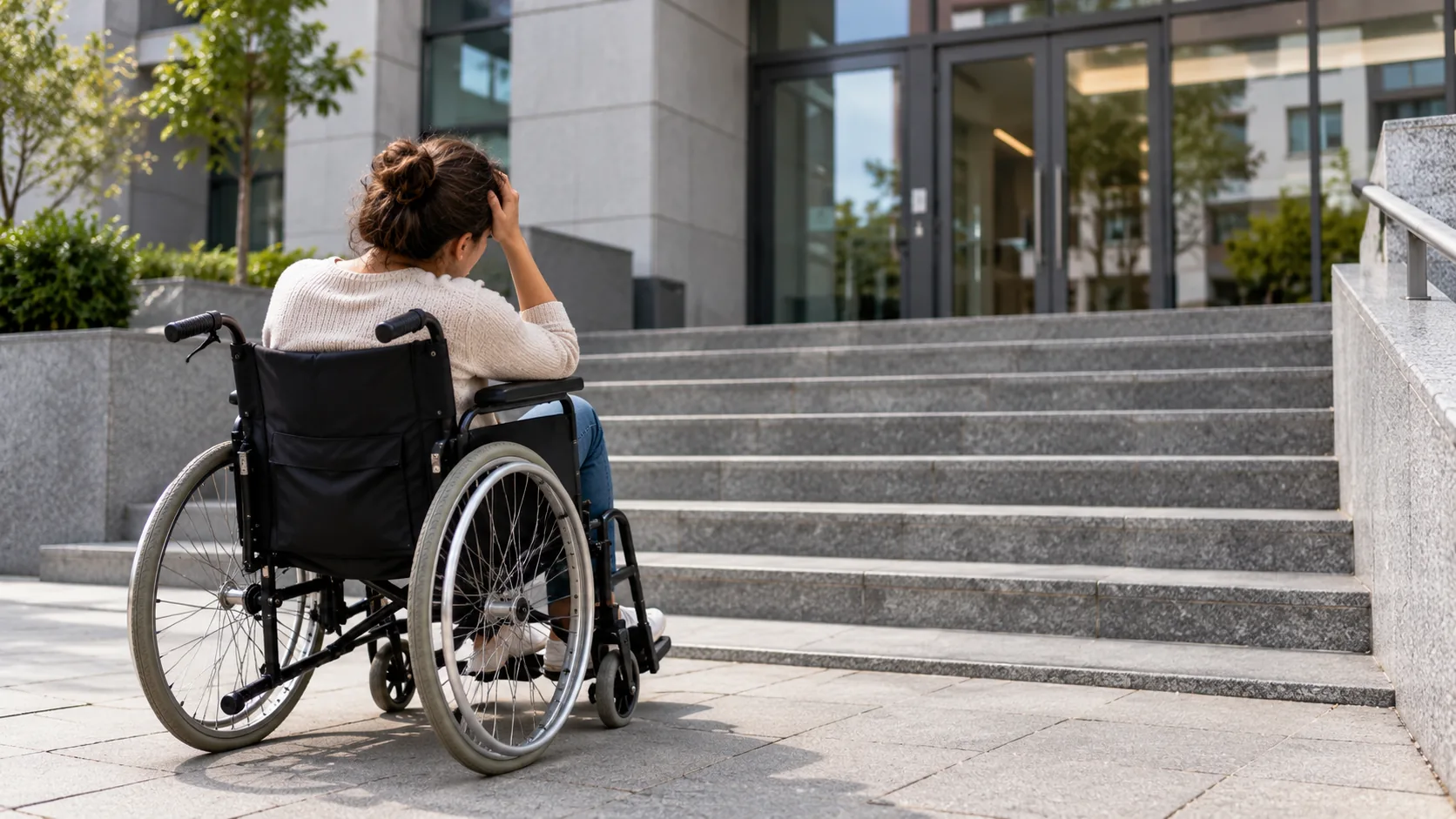
Whether someone can enter their own building, reach a health centre, or get into their town hall's council chamber should not depend on two extra steps. Accessibility is not a technical whim or a regulatory luxury: it is the minimum condition for everyone, regardless of mobility, to access buildings on equal terms. Where there is a physical barrier, there is discrimination.
So before talking about regulations, it is worth saying this first: adapting a building is not just "complying with the law". It is making that building genuinely open to everyone.
What the law says
Royal Legislative Decree 1/2013, Spain's consolidated General Law on the rights of persons with disabilities, recognises the right to universal accessibility and sets the framework for equal opportunities and non-discrimination. In building, that framework is put into practice through the Technical Building Code (CTE) and regional regulations.
For existing buildings and spaces, the law does not require them to be rebuilt as if they were new, but to make reasonable adjustments: the necessary and appropriate adaptations that do not impose a disproportionate burden. The deadline for doing so expired on 4 December 2017, so today it is a fully enforceable obligation.
In Galicia, Law 10/2014 on accessibility develops this framework for planning, building, transport and communication. For buildings in public use, it requires them to be designed, built, refurbished and maintained in a way that guarantees their accessibility.
It also applies to residents' associations
Article 10.1.b of Spain's Horizontal Property Law requires the residents' association to carry out, without a prior vote of the owners' meeting, the works needed to guarantee reasonable accessibility adjustments and, in any case, those requested by an owner whose home or premises are lived in, worked in or used for voluntary work by people with disabilities or people over seventy: a ramp, a lift or other devices that ensure they can make proper use of the common areas.
The obligation has a financial limit: the amount passed on each year, after grants or public aid, must not exceed twelve months of ordinary communal charges. That limit has two important nuances: the works remain mandatory if those who requested them pay the cost above those twelve months, and they are also mandatory when the public aid available to the association reaches 75% of the cost.
If the limit is exceeded and neither of those cases applies, the works stop being automatic, but they are not ruled out: the owners' meeting can approve them by a majority of owners who also represent a majority of shares (Article 17.2), and the decision then binds everyone to pay, even above the annual limit. Spreading the payment over several years to stay within the limit is an option accepted by part of the legal commentary, but it should be assessed case by case.
And to town councils
For local authorities, Law 10/2014 asks for more than case-by-case compliance. For existing streets, parks and other public spaces, its Article 5.4 requires gradual adaptation according to an order of priorities, through municipal strategic accessibility plans, and requires budgets to include specific funding for it every year, within the resources available.
Municipal buildings, for their part, are subject to the same duty of reasonable adjustments as any existing building, with the 2017 deadline already past. Knowing which buildings have barriers, which are priorities and how much it costs to remove them is the sensible way to meet both obligations.
The good news: in the vast majority of cases there is a solution
Accessibility regulations are, today, far more flexible than most people think. For existing buildings they do not impose a single solution, and they expressly provide for alternatives when the conventional one is not viable. The Technical Building Code allows flexibility criteria when working on existing buildings. In refurbishments of buildings in public use where compliance would require disproportionate means, Law 10/2014 allows alternative solutions with a favourable opinion from Galicia's Technical Accessibility Committee. And for heritage-protected buildings it accepts the solutions that provide the best accessibility possible without breaching their protection regime.
A listed building, a narrow entrance, an awkward level change: in the vast majority of cases there is a technical way to solve it, even if it is not the textbook solution. The real challenge is rarely legal. It is almost always a design one: finding the solution that fits that specific building.
What to do in your case
If you are part of a residents' association and need accessibility works, the right starting point is a technical report assessing the cost, the alternatives, and whether the works fall within the mandatory cases of Article 10.1.b. If you are responsible for a town council, the first step is a real assessment of the accessibility of municipal buildings and spaces, so planning and budgeting can be done properly.
Either way, the starting point is the same: a professional who studies the actual building and looks for the accessibility solution that fits it — not the other way round.
Frequently asked questions
Is it mandatory to adapt an older building to accessibility regulations?
Yes, to the extent of reasonable adjustments: the necessary and appropriate adaptations that do not impose a disproportionate burden. It does not have to be rebuilt as if it were a new building.
Can my residents' association refuse to install a ramp or a lift?
No, if it is requested by an owner whose home or premises are lived in or used for work by a person with a disability or someone over 70, and the cost passed on each year, after grants, does not exceed twelve months of ordinary communal charges — or if grants cover 75% of the cost. Above that limit, the owners' meeting can approve it by majority.
What happens if the building is heritage-protected?
The regulations allow alternative solutions that provide the best accessibility conditions possible without breaching the building's protection regime.
Are town councils required to make their buildings and public spaces accessible?
Yes. Their buildings are subject to the duty of reasonable adjustments, and for streets, parks and public spaces Galicia's Law 10/2014 requires gradual, planned adaptation, with specific funding in each year's budget, within the resources available.